2972 Danforth Ave: The Press
This ethnography was proudly funded by Glocal Foundation & Canada Service Corps.
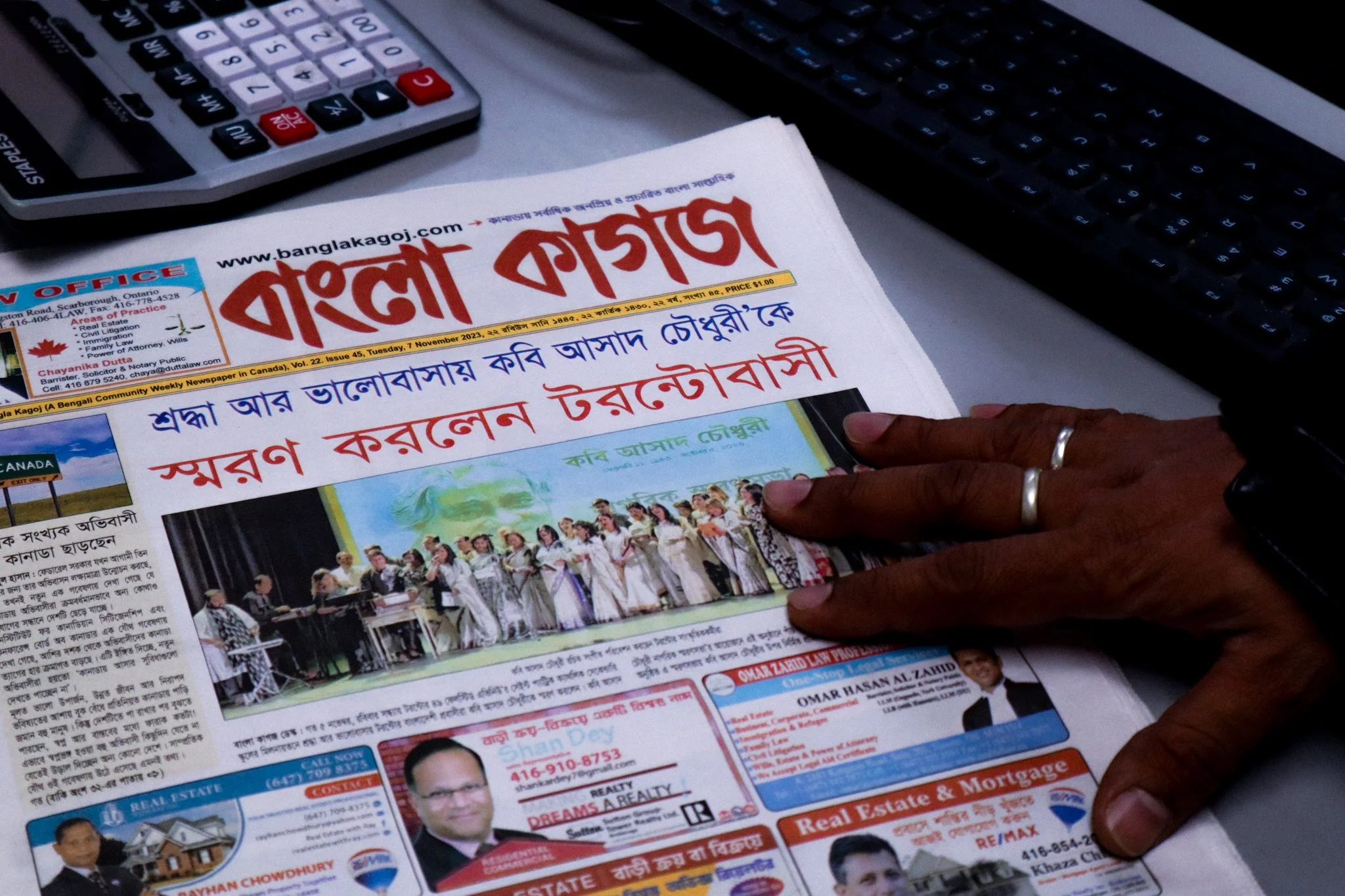
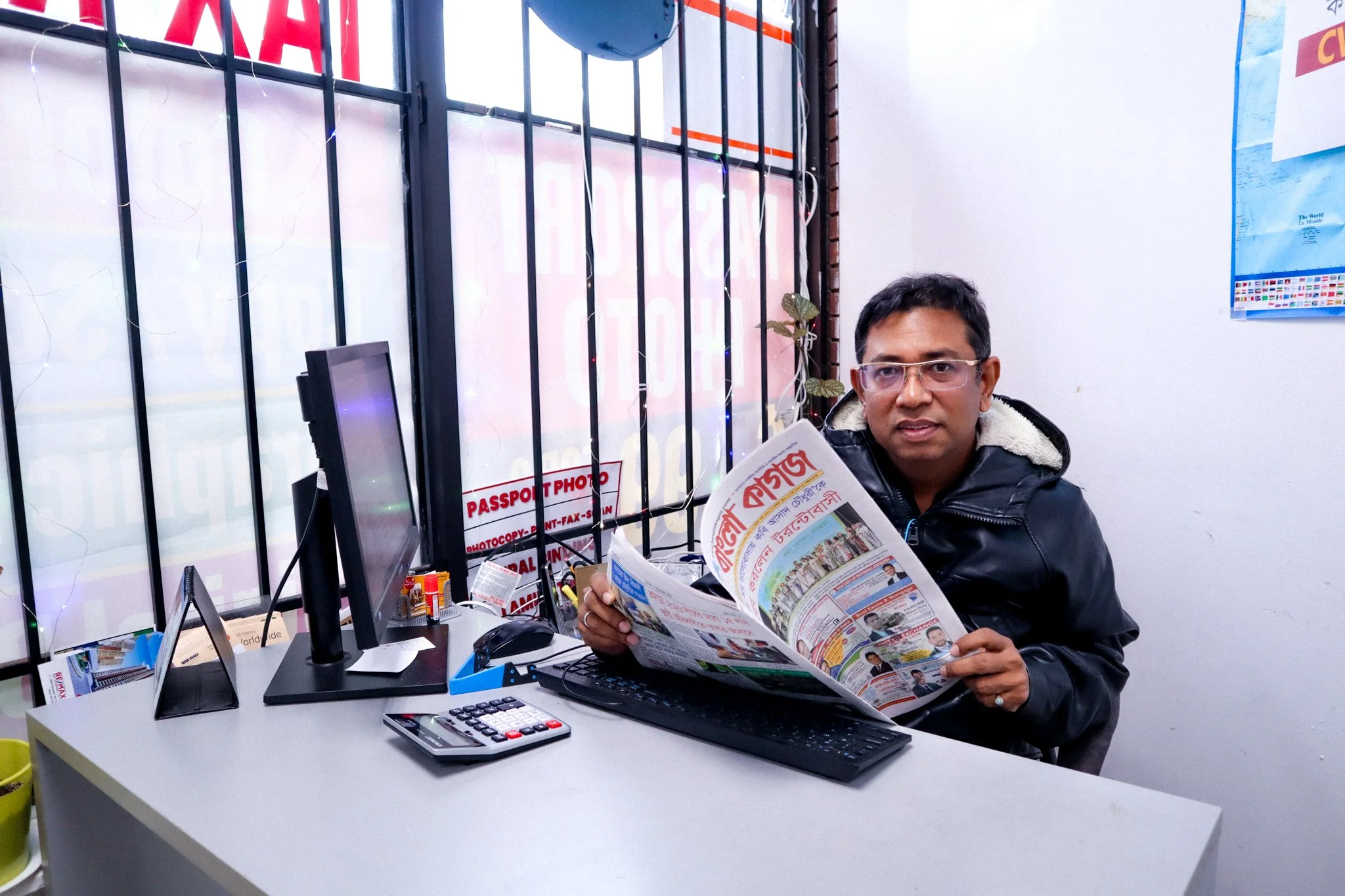
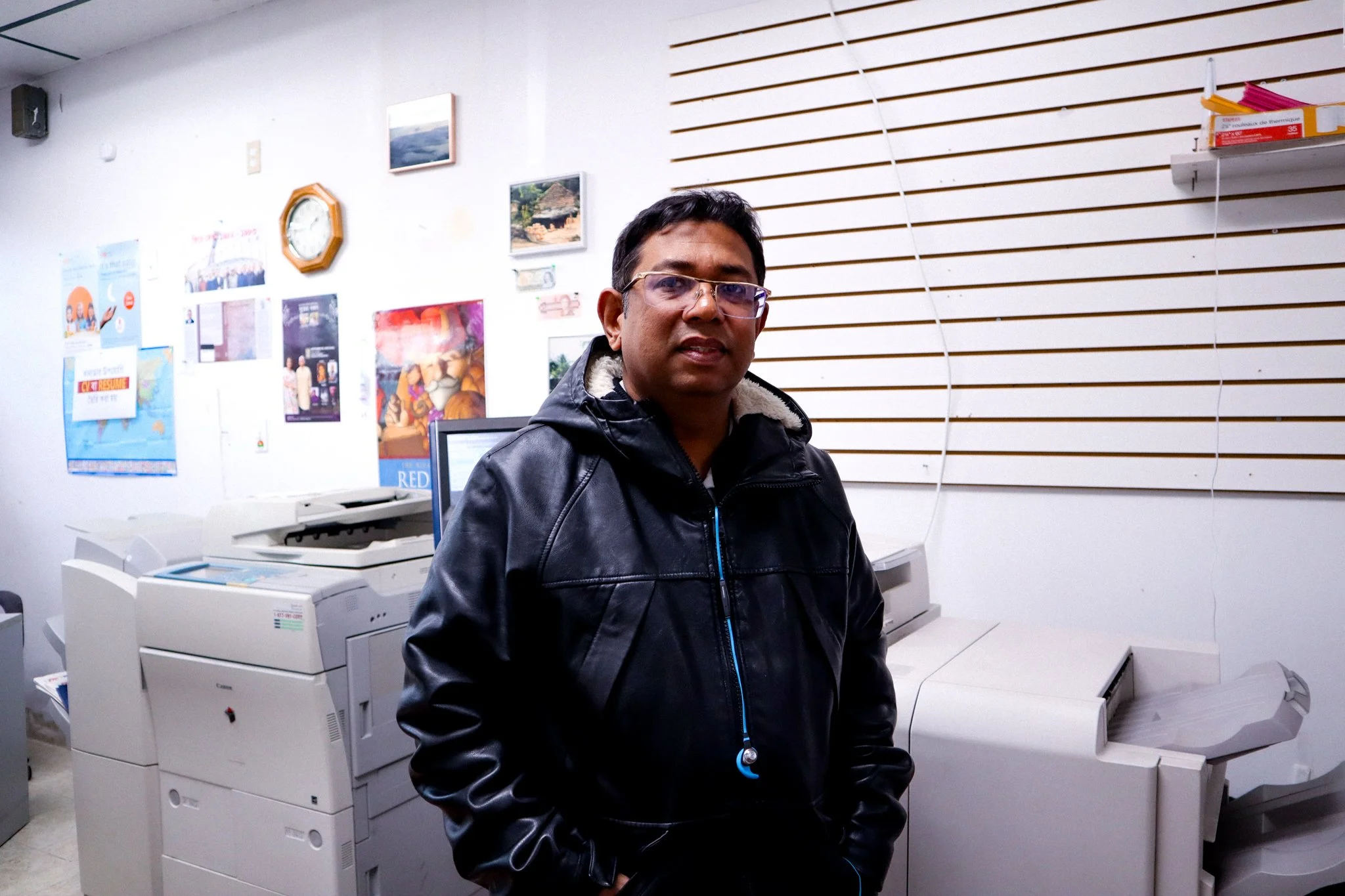
Taposh Kormokar is a veteran writer, journalist, and media personality who has authored over 50 books in Bengali. Having worked across Europe and Asia, he now serves as a key contributor to Bangla Kagoj, the oldest and most popular Bengali newspaper in Canada. His journey highlights the role of the intellectual immigrant—a figure who migrates not just with labor, but with a lifelong commitment to the preservation of language and free discourse.
Zeba Farooque for BacharLorai
Ethnography
To understand the soul of BanglaTown, one must look at the ink it produces. For Taposh Kormokar, the transition to Canada was a search for a "well-oiled machine" of free expression. In a global landscape where the pen can often put a writer’s life in danger, Kormokar views the Danforth as a sanctuary where the "immortal character" of writing can flourish without fear. Bangla Kagoj is more than a news outlet; it is an intellectual archive that has documented the evolution of the Bengali-Canadian experience for twenty-five years. It serves as the community's collective memory, proving that a diaspora is defined as much by its literature as it is by its commerce.
The Writer as a Social Navigator
Zeba Farooque for BacharLorai
Kormokar’s role illustrates a specific success strategy of the Minority-Led Business: the selfless service of the intellectual press. Unlike retail or hospitality, the ethnic newspaper often operates on a mission that transcends profit. Taposh views his profession as a "selfless" act of community service. By documenting the language of the martyrs—the only language people have died for—the newspaper provides a form of Social Innovation. it transforms a group of immigrants into a "literary public," providing them with the narrative tools to see themselves as part of a grand, historical continuity rather than just a transient workforce.
"Just like how a bee is attracted to nectar, every writer is attracted to their pens... We do not sell products, we do not look to earn money, all we want to do is serve our community. Writing possesses an immortal character—his writing still exists, and it is still inspiring me." — Taposh Kormokar
Narrative Data and the Motherland Affinity
Zeba Farooque for BacharLorai
Kormokar’s work is a primary laboratory for Diaspora Data Literacy. Through his publications, he explores the "human brain’s affinity towards the motherland," documenting how the feeling of meeting a fellow Bangladeshi abroad is an "out of this world" experience that collapses political and socioeconomic differences. By publishing these stories, Bangla Kagoj creates a shared dataset of the diaspora experience. It allows the community to track its own growth, celebrate its icons (like the Shaheed Minar), and advocate for its expansion. This "narrative data" is what allows the community toTreat BanglaTown with the respect needed to improve their reputation in the eyes of the broader Canadian public.
The Immortal Heritage of the Word
Zeba Farooque for BacharLorai
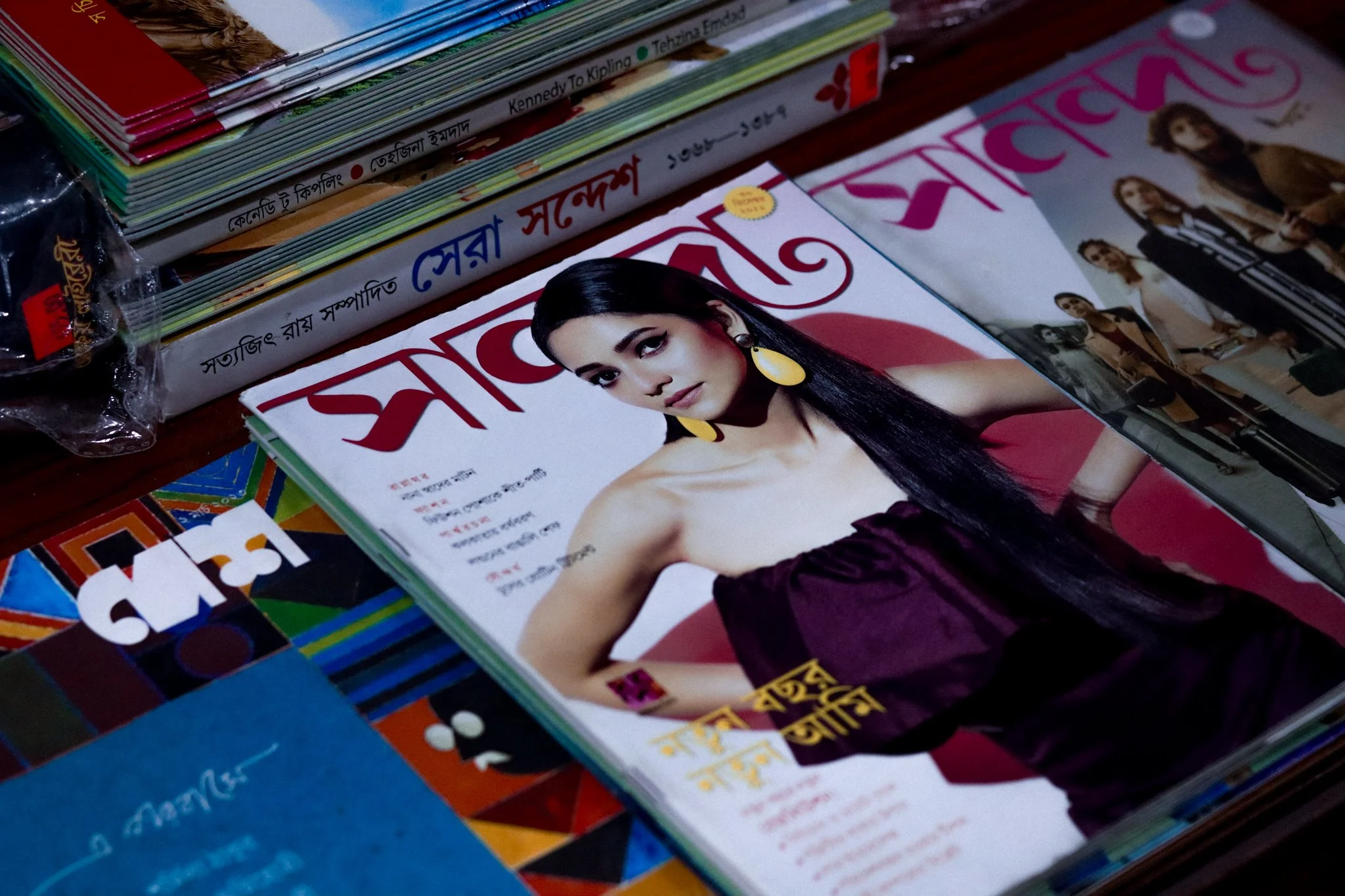
For Kormokar, the Danforth is a place of "coming together" where one can write, speak, and be Bengali. He urges the community to treat the neighborhood with the dignity it deserves, viewing it as a slice of the homeland that must be expanded and protected. He recognizes that while the first generation built the shops, it is the writers who build the legacy that inspires future generations. In his view, the paper is not just for the present; it is a message in a bottle for the Bangladeshi-Canadians of the future, ensuring they never forget the weight of the language they carry.
Research Insight: This ethnographic study of Taposh Kormokar and Bangla Kagoj identifies the ethnic press as a vital pillar of Social Innovation in immigrant enclaves. By documenting the "immortal character" of writing, the newspaper functions as an intellectual repository that fosters civic belonging and resists cultural erasure. The press serves as a vehicle for Diaspora Data Literacy, transforming personal narratives of migration into a collective archive of the community's maturation. Ultimately, this "selfless" business model provides a high-frequency indicator of a diaspora's health, proving that minority-led media is essential for maintaining the linguistic heritage and political agency required for a community to transition from "newcomers" to an influential urban "Town."
Inspiration
Zeba Farooque for BacharLorai
Taposh Kormokar believes that while a person may pass away, their words remain "immortal." Through Bangla Kagoj, he and his colleagues have spent twenty-five years ensuring that the Bengali voice in Toronto is never silenced. As the neighborhood continues to grow, Kormokar remains a guardian of its soul, inviting everyone—from the hungry diner to the ambitious immigrant—to treat the Danforth not just as a street, but as a living book of their shared history.