
Community
Breaking Point: Canada’s Productivity Problem
At A Glance
-
“Working with BacharLorai Global was instrumental to the success of our case competition. Their team brought strategic clarity, outstanding support, all while offering our competitors an additional incentive for competing.
The collaboration was an outstanding experience for the UEC, and our winners have been provided a remarkable opportunity that we are all incredibly grateful for.”
— Nicolas Fortun, Case Competition Director
-
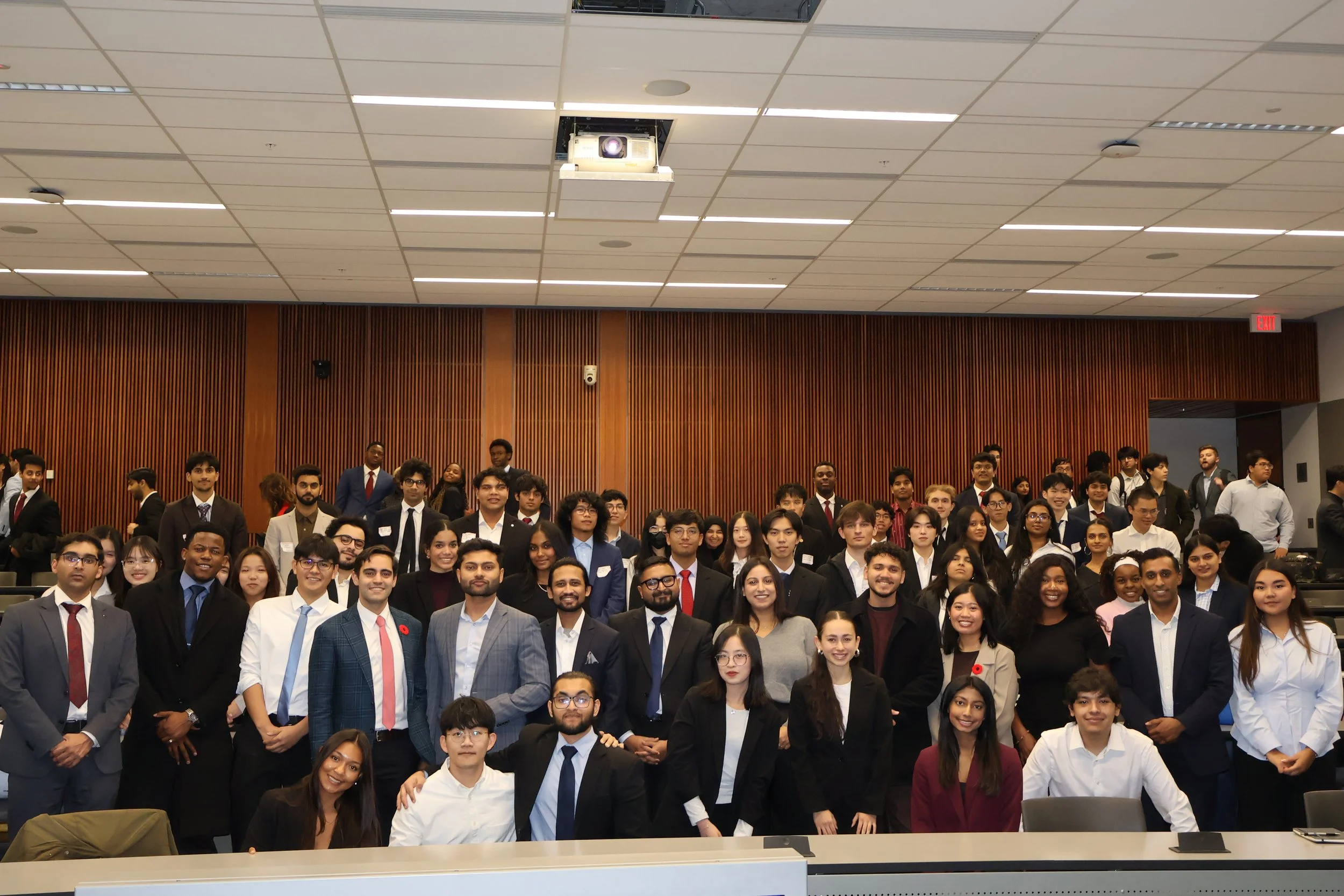
150 Attendees
-
November 8, 2025
-
SDG 4: Quality Education
-
UofT Mississauga
Impact
Overview
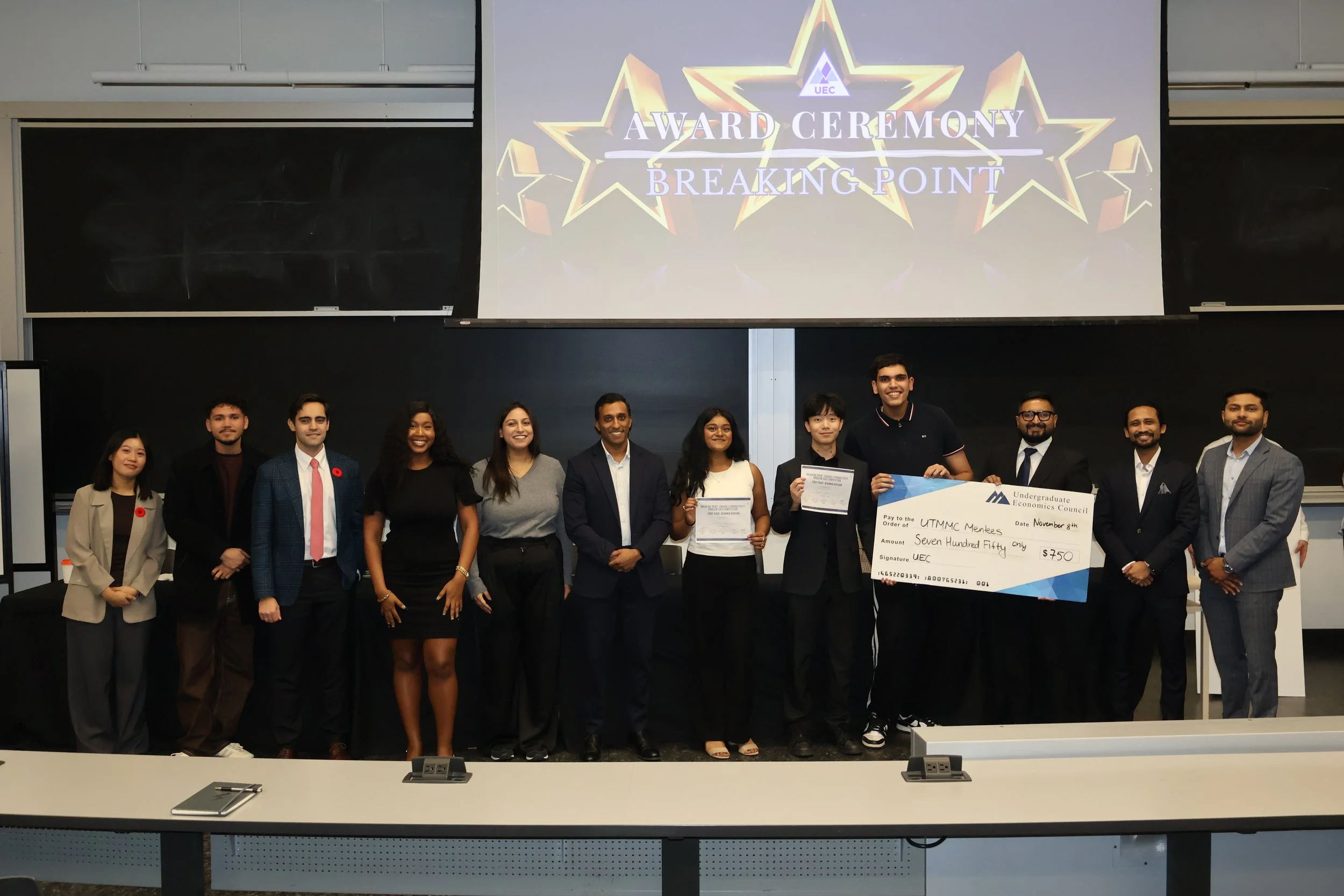
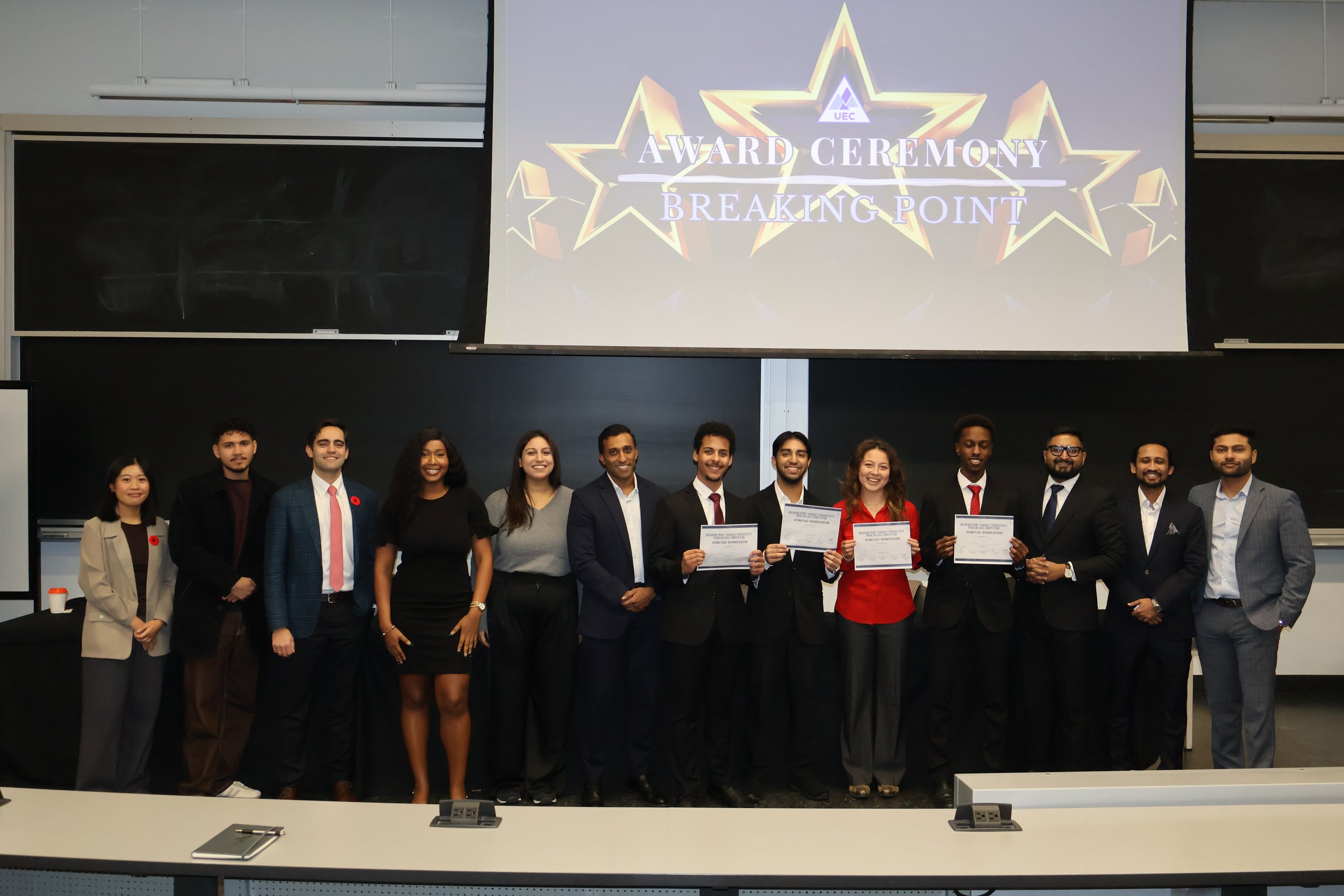
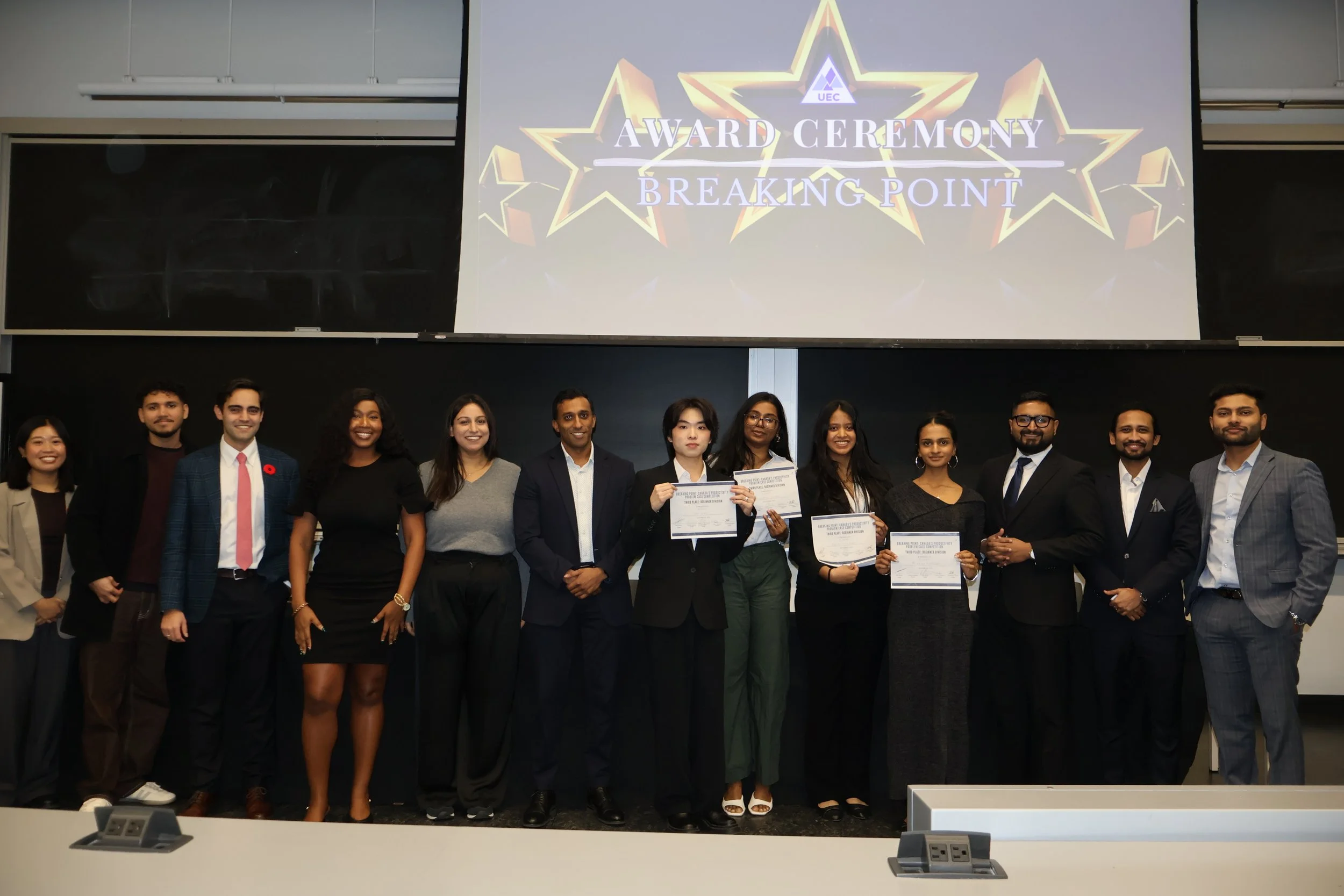
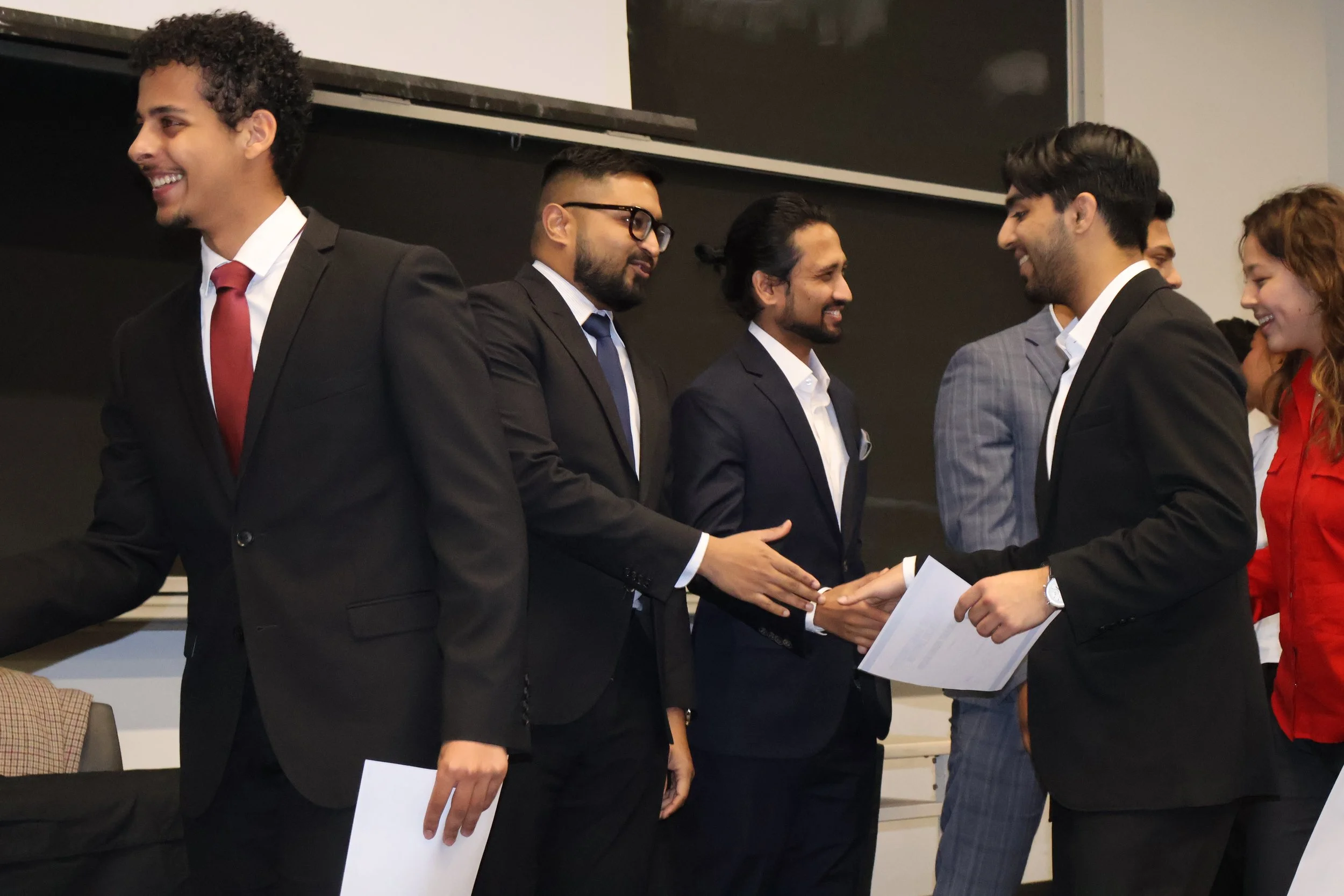
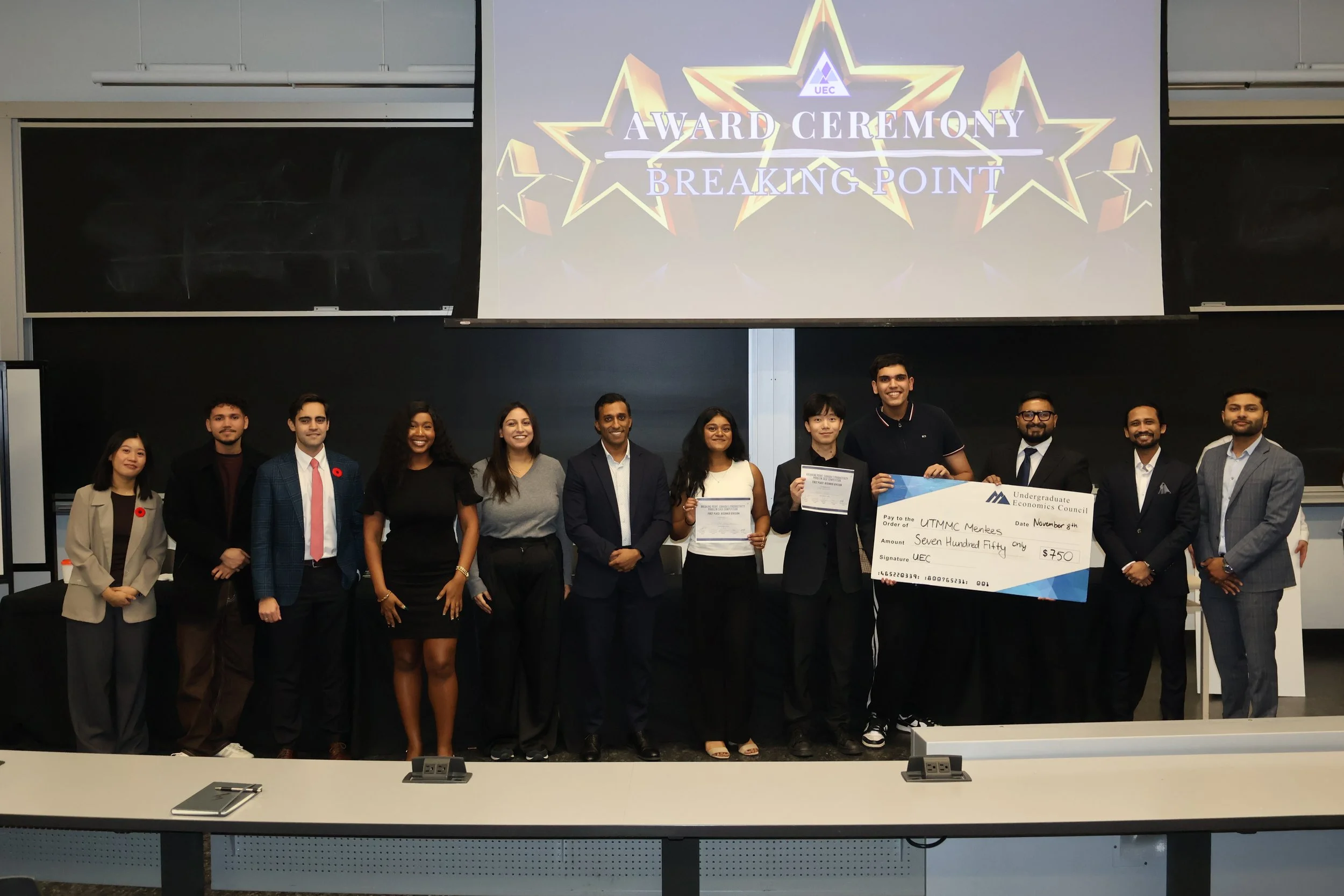
Students proposed innovative strategies to tackling Canada’s productivity problem and strengthen their proposals through the feedback and questions of industry professionals. From the 26 registered teams, a total of $3,600 was awarded to top teams, whose proposals entailed multi-tiered solutions combining targeted incentives, data-driven programs, and reintegration mechanisms.
Our partners


Project Team
Anil Wasif, Founding Director, BacharLorai
Farhim Zaman, Founding Director, BacharLorai
Zubaeerul Islam, Senior Innovation Consultant, BacharLorai
Winning Teams
Advanced Division: UTMMC
Sahar Himmati, Adilya Kozhabay, Catherine Choi
Advanced Division: UTMMC Mentees
Lily Le Kasperski, Jesse Chen, Bhavya Mehra, Harshita Nagireddy
SDG Alignment

Target 4.3
Ensure equal access for all women and men to affordable and quality technical, vocational and tertiary education, including university.
Context
Breaking Point: Canada’s Productivity Problem was the Undergraduate Economics Council’s Fall case competition for the 2025–2026 academic year. As the economics society at the University of Toronto Mississauga, the UEC aims to provide students with opportunities to apply classroom theory to real-world economic challenges.
The Bank of Canada has described the country’s ongoing productivity slowdown as a “break the glass” moment—one requiring unprecedented action to ensure clarity, stability, and long-term prosperity for Canadians. With Canada lagging behind other developed nations, students were challenged to design policy solutions addressing this issue while balancing diverse stakeholder perspectives.
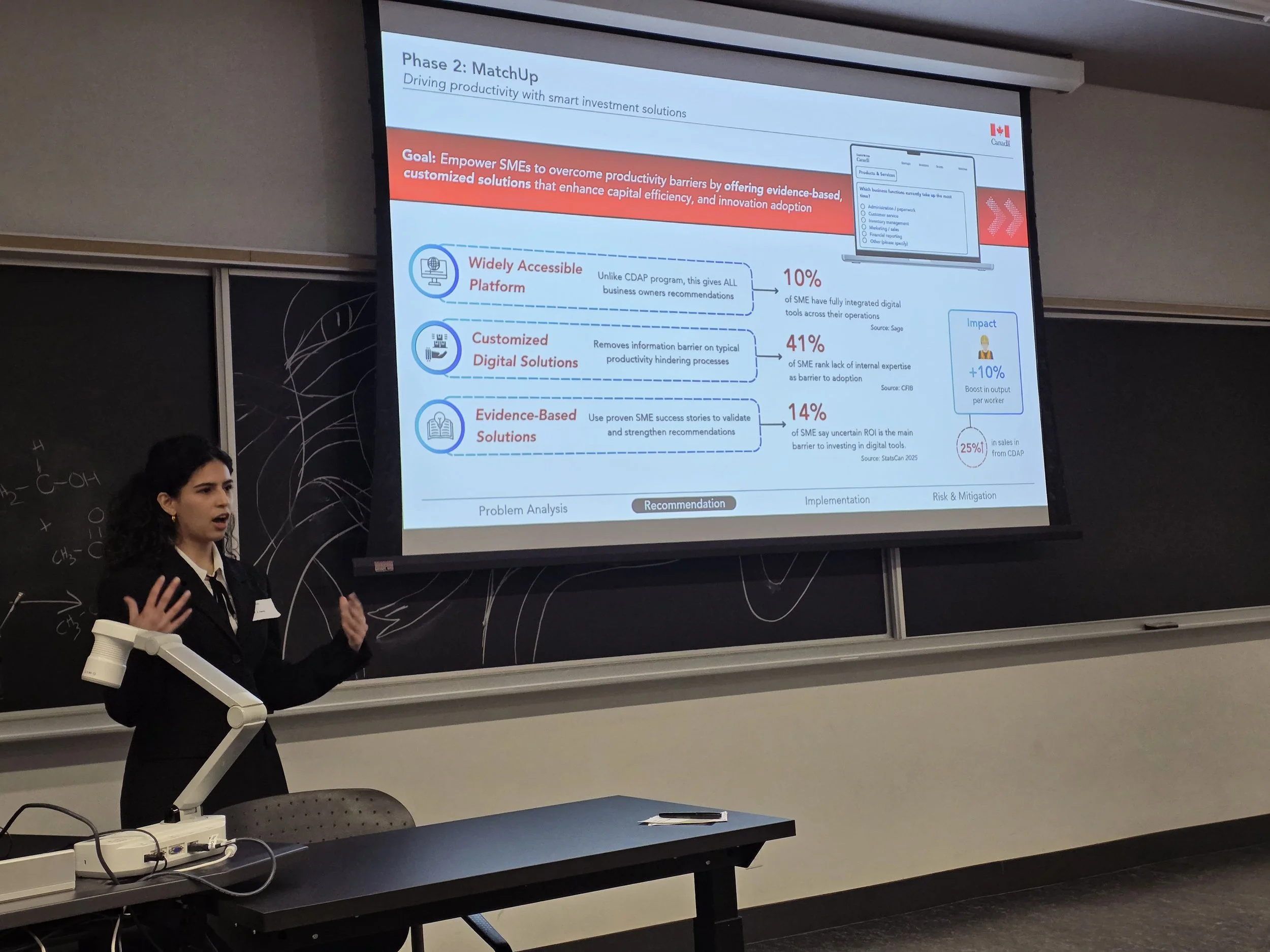
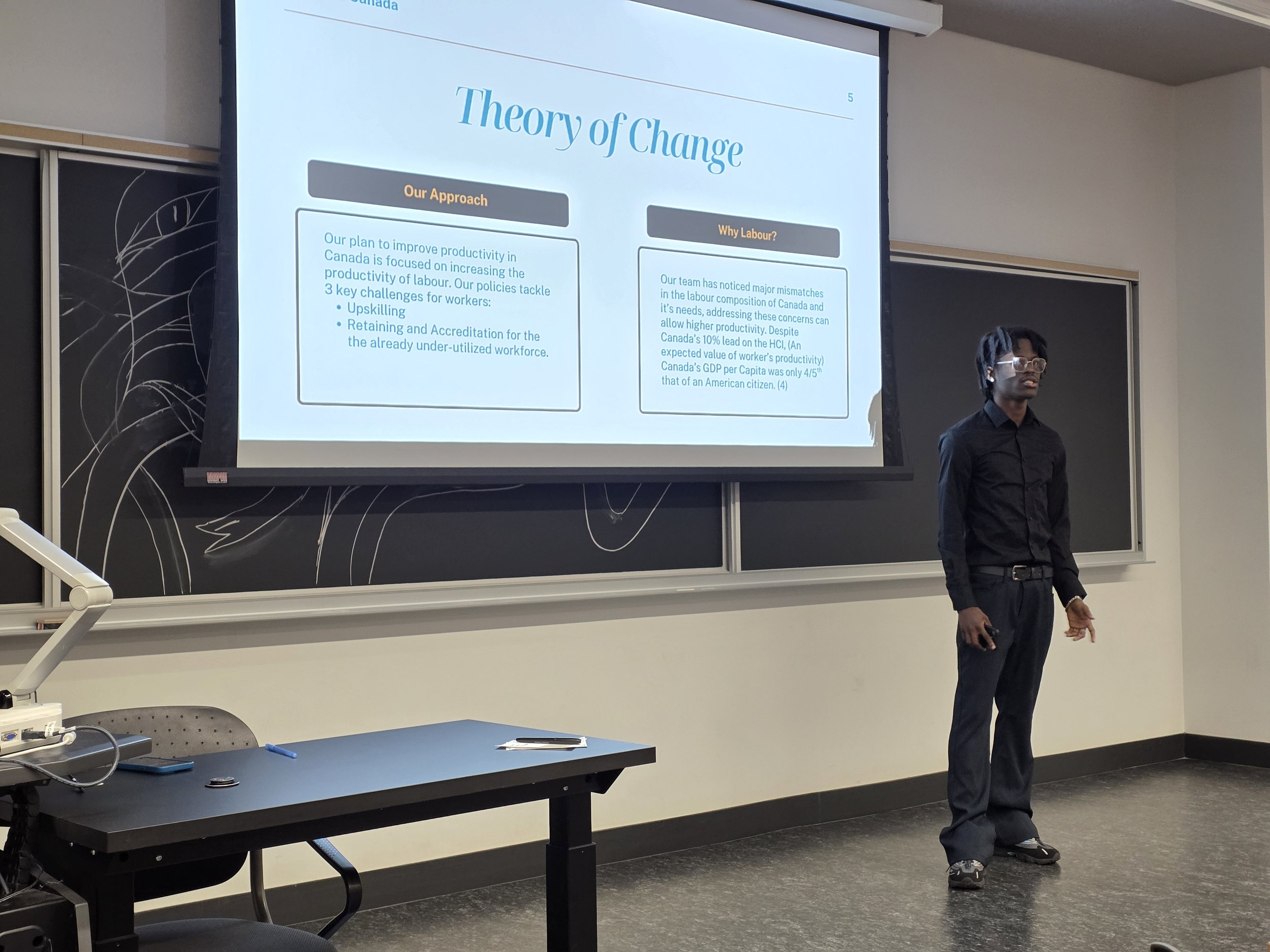
A total of 26 teams competed for a prize pool of $3,600, with top teams earning the opportunity to publish in BacharLorai Global’s policy op-ed, ImpactInk. Teams were grouped into two divisions based on knowledge and experience. After two weeks of preparation, they delivered 6–8 minute presentations outlining their proposed solutions. Panels of industry professionals from organizations such as the Bank of Canada, Deloitte, KPMG, and BacharLorai Global evaluated the presentations.
Anil Wasif, Founding Director of BacharLorai Global and Research Manager at Infrastructure Ontario, delivered the keynote address, outlining the roots of the productivity slowdown and the critical role the next generation of economists will play in solving it. Ryan Manucha, award-winning author and research fellow at the C.D. Howe Institute, provided closing remarks, reflecting on the students’ achievements and connecting them to his own work on productivity.