2594 Danforth: The Kitchen as a Consulate
This ethnography was proudly funded by the GLOCAL & Canada Service Corps.
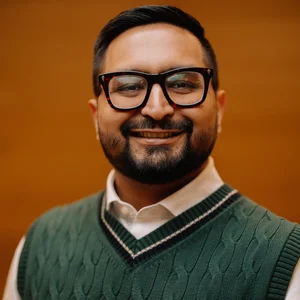
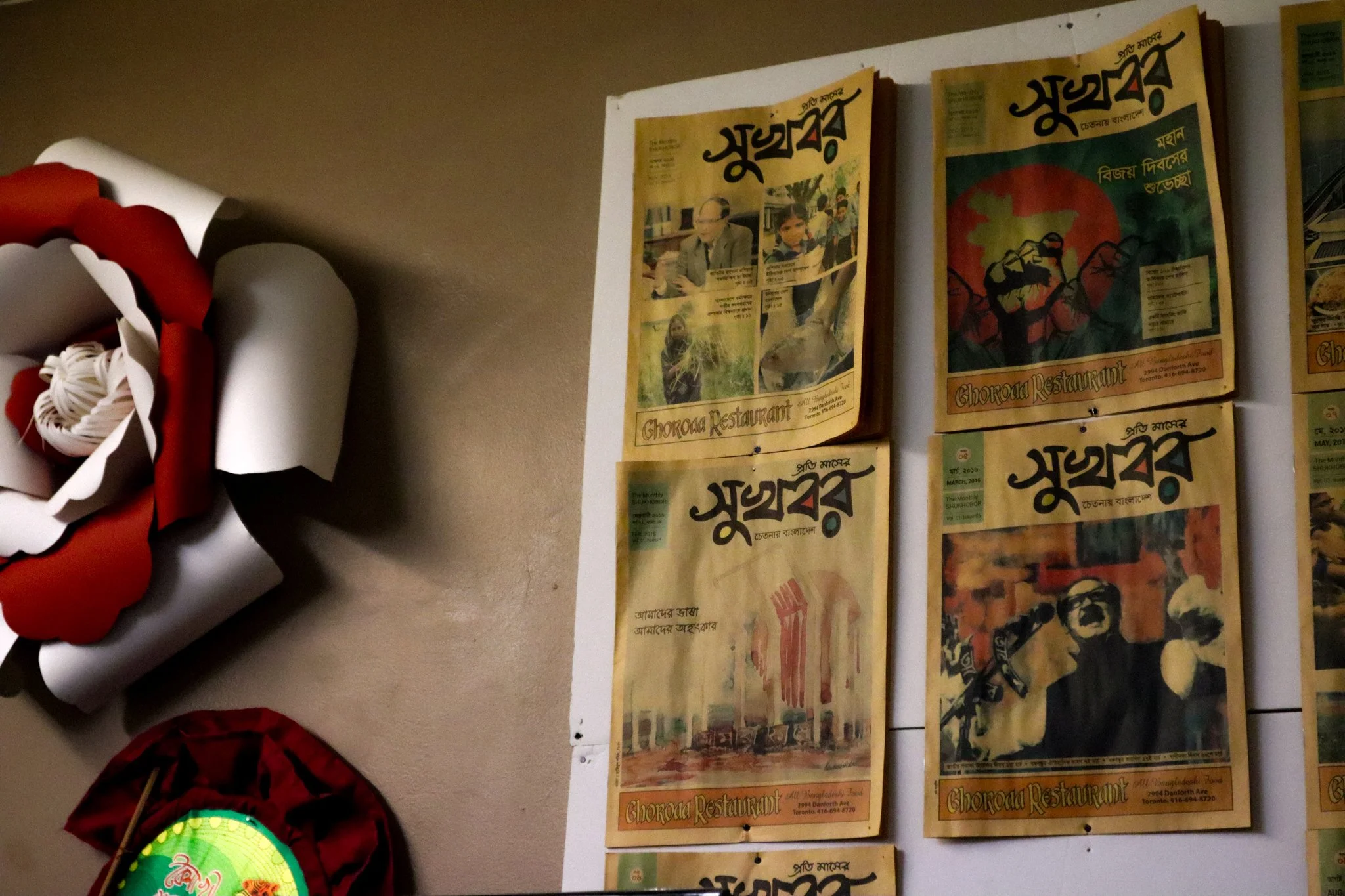
Syed Shamsul Alam immigrated to Canada from Norway in 1995. Known to the neighborhood as "Mama," he is the founder of Ghorowa, a community historian and the publisher of Shukhobor. His journey from a student in Dhaka to a cornerstone of the Danforth illustrates the deep evolution of Toronto’s Bengali enclave.
Zeba Farooque for BacharLorai
Ethnography
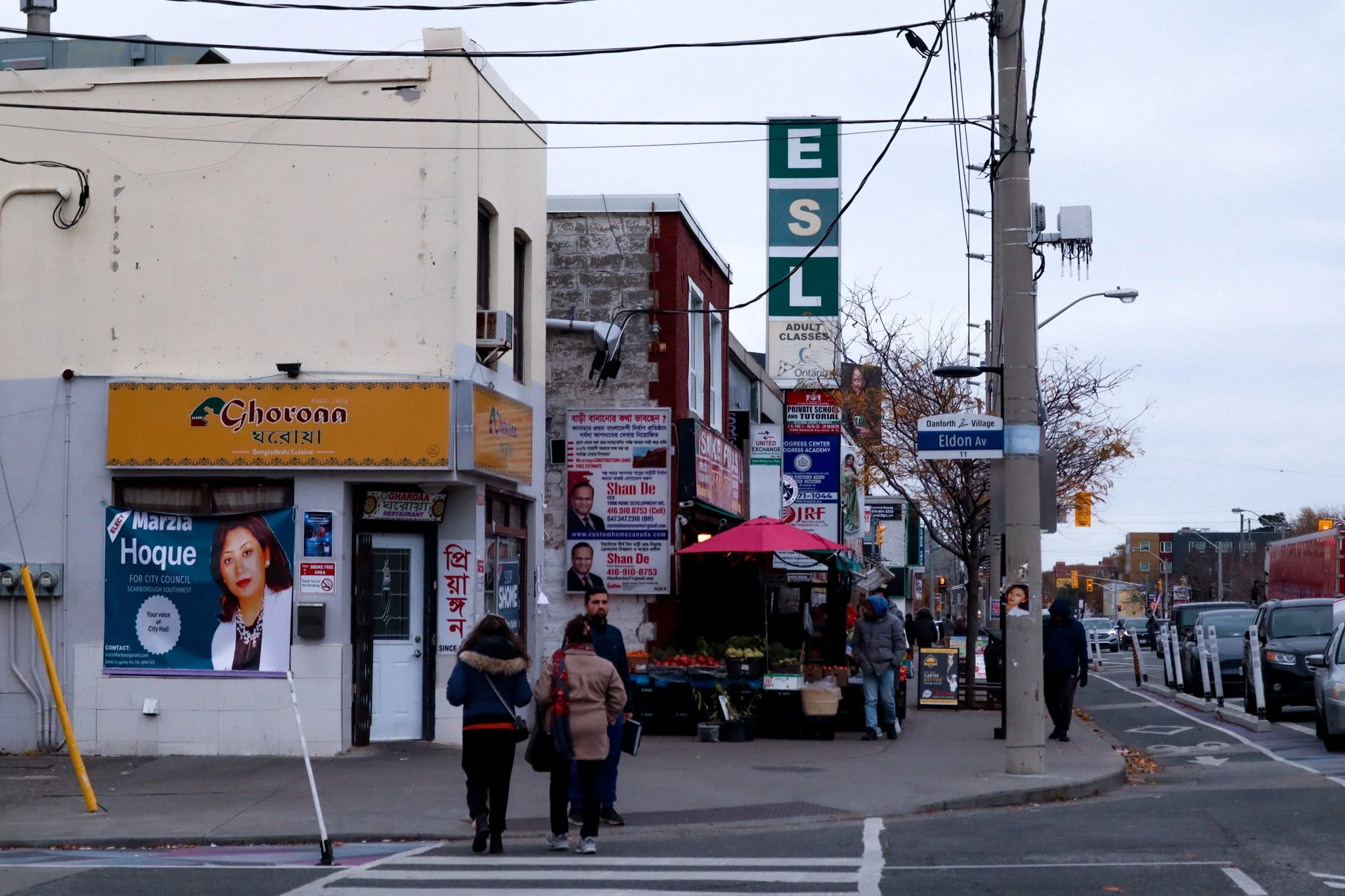
To understand the social economy of BanglaTown, you have to look past the menu at 2594 Danforth. When Syed Shamsul Alam arrived in 1995, the Danforth was a landscape of Greek and Italian storefronts where the Bengali voice was still a whisper. His shop did not begin as a restaurant; it began as a semiotic bridge. It was a video and cassette store, a repository of cinema and music that functioned as the community's umbilical cord to Dhaka. But over twenty-five years, Ghorowa (meaning "homestyle") underwent a biological change. It stopped being a retail shop and started being a Consulate of the Common Man.
The Kinship of the Kitchen
Zeba Farooque for BacharLorai
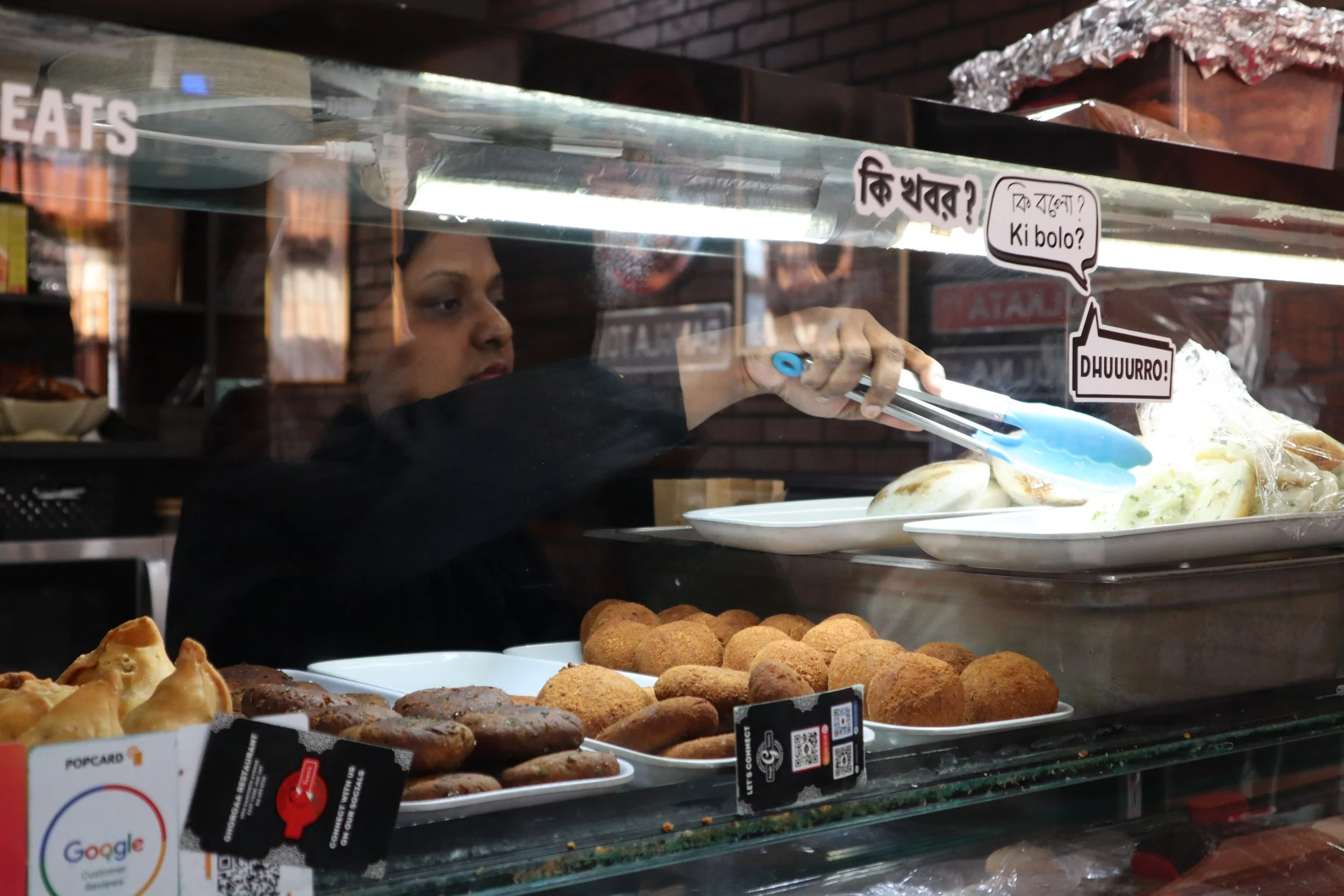
In the late 1990s, a wave of young men arrived from Sylhet. They were "bachelors", facing the cold isolation of a recession-hit Canadian job market. Syed’s wife, affectionately known as "Mami," recognized that their primary barrier wasn't just financial; it was the quiet weight of social atomization.
The transition from media to meals wasn't just a business pivot—it was a survival strategy. By assuming the roles of "Mama" and "Mami," the Alams transformed their customers into fictive kin. This created a social cushion that stabilized these young men, providing them with the psychological security of a home-public. This was not just commerce; it was a grassroots innovation that baked community resilience into the daily act of serving rice and fish.
"I divided my shop into half... allowed 10-12 people to gather here and chat. I set up a carrom board in the basement for them. This went on for a while. A larger amount of people started coming from 2000." — Syed Shamsul Alam
The Diary as an Archive
Zeba Farooque for BacharLorai
One of the most profound insights hidden in Ghorowa’s history is the "Job Diary." Long before LinkedIn or official newcomer portals existed for this community, Mami kept two handwritten notebooks: one for those seeking work and one for those hiring.
This was the community’s own form of data literacy—collecting its own metrics to solve its own problems outside of formal institutions. By surfacing these informal labor maps, we can see Ghorowa not just as a restaurant, but as a self-sustaining employment engine. It is a narrative tool that proves the neighborhood supports 25 families directly and hundreds indirectly, long before the city recognized it as an official "Town."
Negotiating the Right to the City
Zeba Farooque for BacharLorai
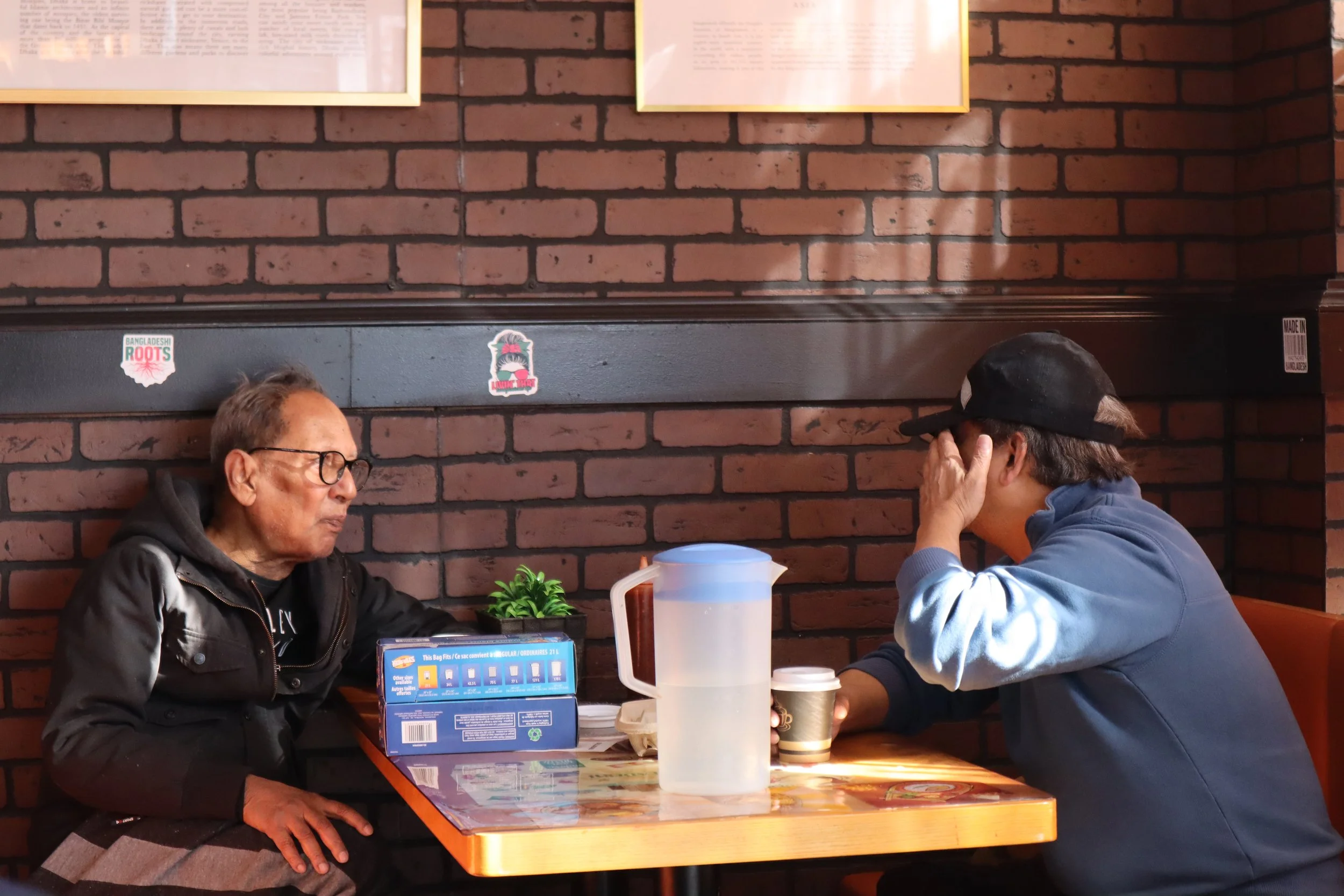
Ghorowa is where the political soul of the neighborhood was born. The struggle to build the Shaheed Minar and the "Welcome to BanglaTown" banner represents a sophisticated level of civic negotiation. Syed’s narrative reveals the "emotional lobbying" required to turn an "illegal" sign into a municipal landmark. This ability to move the city—to claim space for Bengali heritage—serves as a high-frequency indicator of how an immigrant cluster can eventually reshape the policy and identity of a global city.
Research Insight: This ethnography reveals how Ghorowa functions as more than a minority-led business; it is a laboratory for social innovation. By analyzing the Alams' entrepreneurial pivot from transactional retail to communal hospitality, we uncover a protective strategy against immigrant isolation. Furthermore, the discovery of the "handwritten diaries" provides a rare primary dataset on diaspora data literacy, highlighting how communities self-organize informal labor markets when formal systems fail. Ultimately, the transition from storefront to cultural monument serves as a vital indicator of presence, measuring the social maturation and political resilience of an urban diaspora cluster.
A Legacy in Transition
Zeba Farooque for BacharLorai
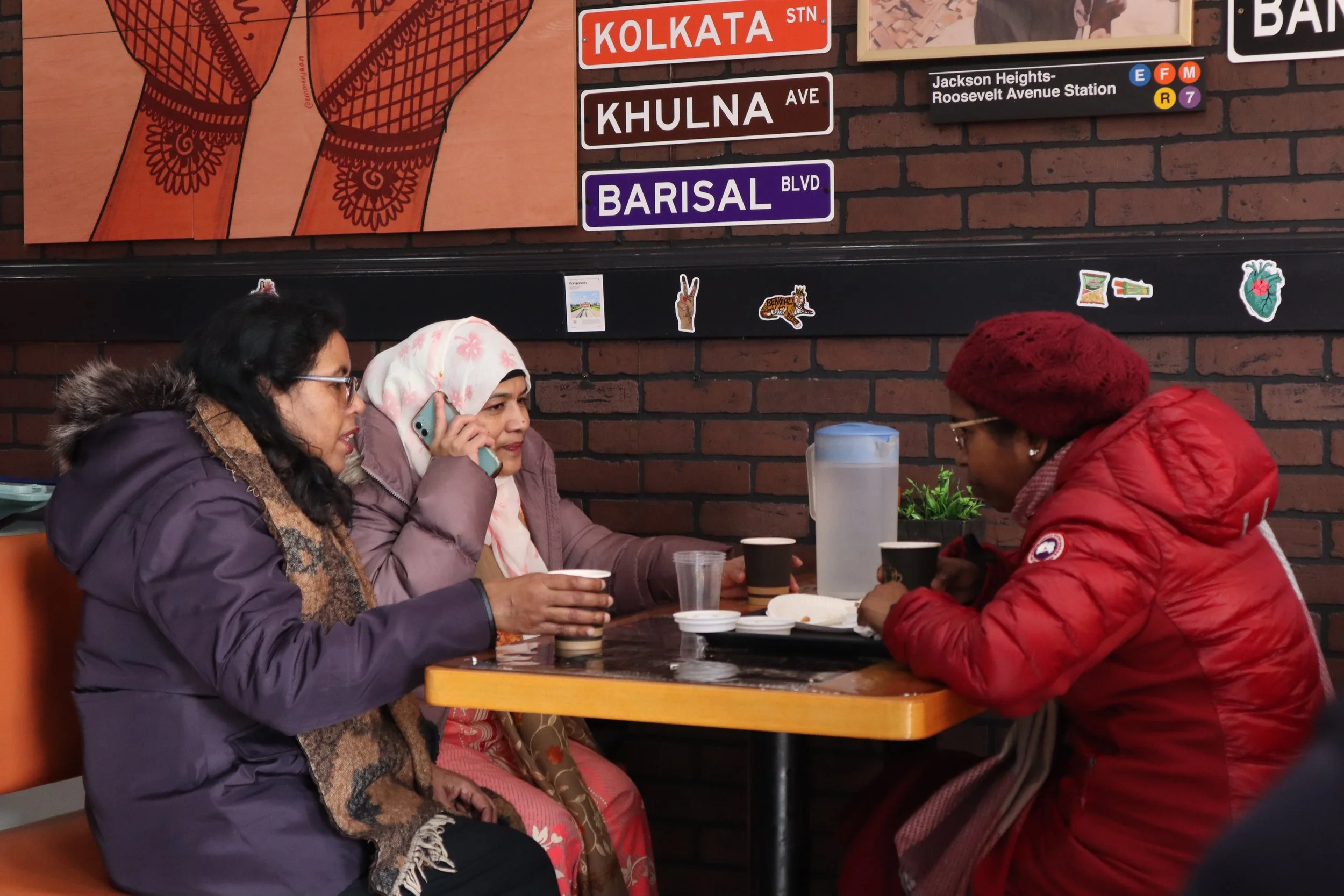
As Ghorowa expands into a second, more "modern" branch under Syed’s son, Raafi, the ethnography enters a new phase: the institutionalization of heritage. The "messy rooms" once filled with festival decorations are being traded for high-standard stages and live music. The "Home-Public" is becoming a franchise, but the core mission remains unchanged—providing a place where, as "Mama" says, "young people can have the courage to call the right things right."